$1 Trillion in Ads. Who's Actually Watching?
Ad budgets are hitting a record. The audience already moved to live streams, games and creators.

Global ad spend is forecast to pass $1 trillion for the first time this year.
Only 44% of US adults say they actually watch an unskippable ad when one plays.
That gap is the whole story. Brands have never paid more to reach people, and people have never been better at not being reached.
The money
Start with the size of it. dentsu expects global ad spend to grow 5.1% in 2026, with digital taking 68.7% of the total. Social alone is forecast to grow 11.4%.
In the US, internet ad revenue hit $294.6B in 2025, up 13.9%. Social media was $117.7B of that, up 32.6%. Digital video was $78B, up 25.4%.
The fastest part is creators. US creator ad spend went from $29.5B in 2024 to $37B in 2025, a 26% jump. The IAB says that is about 4x faster than the media industry overall, and it projects $44B for 2026.
Now look at one brand. Monster Beverage spent $599.9M on advertising and promotion in 2025, up from $584.1M in 2024 and $528.9M in 2023. That is one energy drink company. If you have watched competitive gaming, you have seen the logo.
| 2023 | $528.9M |
|---|---|
| 2024 | $584.1M |
| 2025 | $599.9M |
Source: Monster Beverage 2025 Form 10-K, Note 1 (sec.gov)
So the money is real and it keeps growing. The question is what it buys.
The attention problem
A paid impression and a watched ad are two different things.Attest surveyed 1,000 US adults this year and asked what they do when an unskippable ad plays. 44% said they watch it as intended. 34% shift their attention somewhere else, 17% mute it and 3% stop watching completely. In the UK, only 35% watch as intended.
- Watch as intended44%
- Shift attention elsewhere34%
- Mute17%
- Stop watching3%
| Watch as intended | 44% |
|---|---|
| Shift attention elsewhere | 34% |
| Mute | 17% |
| Stop watching | 3% |
Source: Attest 2026 attention economy report, 1,000 US adults, via Advanced Television. Shares as reported, they do not sum to 100.
Those are the ads people can’t skip. Then there are the people who never see an ad at all. 52% of consumers across 48 markets have used an ad blocker, according to YouGov. In the US it is 45%.
And there is the stuff people technically see. Nielsen Norman Group has documented banner blindness since 1997. In its eye-tracking research, a right-rail ad area that took up about 25% of the content area got about 0.8% of the attention.
I streamed for years. I know what happens when an ad break hits. People tab out, grab food, check their phone. They came for the game.
The part nobody tabs out of is the play itself. The last fight of a match, a 1v3, the second after a win. Chat goes off, people clip it, and it gets posted again that night. In all my years streaming, I never saw a viewer rewatch a sponsor segment. They rewatch the clutch.
Where the attention went
It went to things people choose to watch.
About 3.58 billion people played video games in 2025, according to Newzoo.
Live streaming hit 20.9 billion hours watched in Q4 2025 alone. Twitch did 4.38B of those hours, YouTube Gaming 2.19B and Kick 1.22B. Kick was up about 106% year over year.
| Twitch | 4.38B |
|---|---|
| YouTube Gaming | 2.19B |
| Kick | 1.22B |
Source: Streamlabs and Stream Hatchet Q4 2025 Live Streaming Report, Feb 2026
Younger audiences made this switch a while ago. As of 2023, Gen Z was spending about 1 hour 51 minutes a day streaming against 38 minutes on live TV. And 43% of Gen Z now depend on platforms like YouTube and TikTok for media and news.
A stream is different from a feed. People pick a creator and stay for hours. They watch the fights, the clutches, the reactions. That is where the eyes are, and most ad formats sit outside those moments.
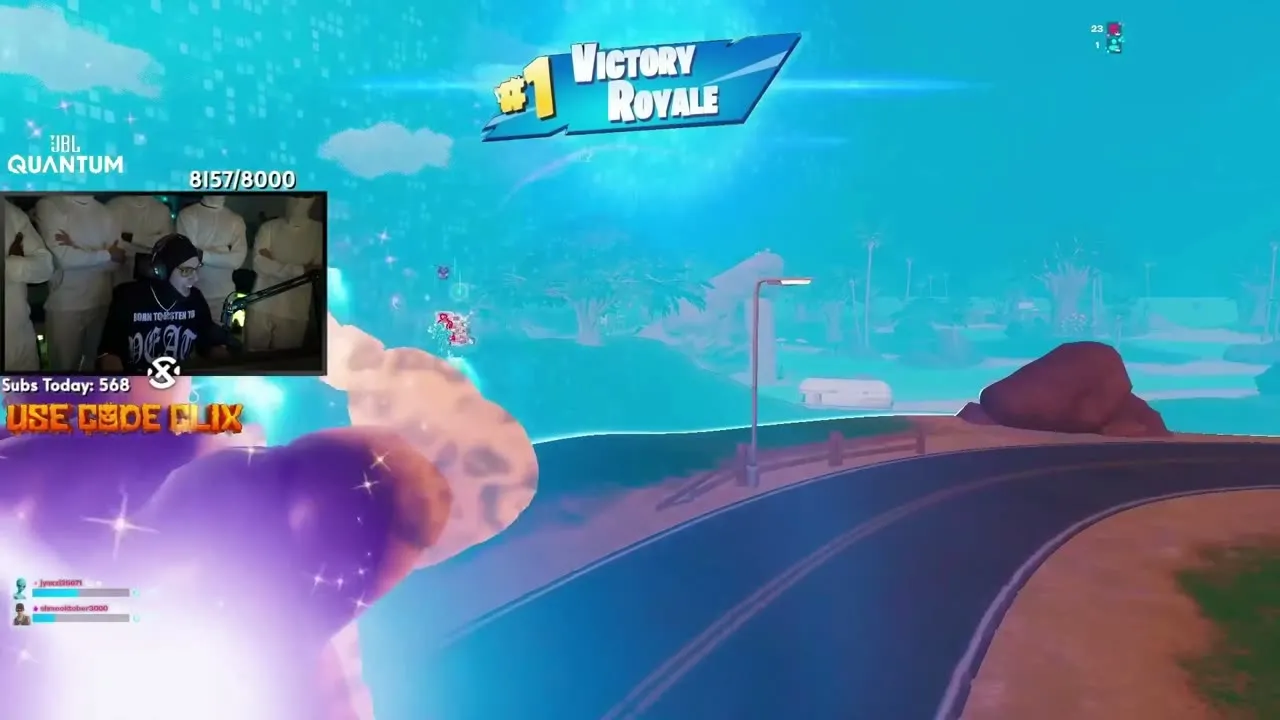
What actually works
There is solid research on what happens when the ad is part of the thing people are watching.
Anzu and Happydemics looked at 110 campaigns. In-game ads scored 13 points above the digital media average on ad recall and 11 points above on brand identification. On purchase consideration they beat online video by 5 points, display by 3 and CTV by 2.
| vs Online video | +5 pts |
|---|---|
| vs Display | +3 pts |
| vs CTV | +2 pts |
Source: Anzu and Happydemics, 110 campaigns, Mar 2024, via the 4A's
A separate two-year study from Anzu and Lumen Research found in-game ads reached 98% viewability, against a 78% average across 42 digital ad formats.
The reason is simple. The player is looking at the game, and the ad is in the game. Ads that are part of the experience get remembered. Ads next to it get ignored.
Streams work the same way, with one difference. In a game, the ad sits on a billboard inside the world. On a stream, the thing everyone is locked onto is the creator’s big moment. That is the spot that matters, and a sponsor read can’t reach it. Nobody stops mid-fight to read ad copy.
The clip shift
For years, a creator’s best moments got reposted by clip accounts that had nothing to do with the creator. The platforms are done with that.
On April 30, Instagram head Adam Mosseri said Instagram would crack down on accounts that re-upload other people’s content. On October 1, YouTube said Shorts recommendations will favor original content, and channels that mainly re-upload other people’s videos will get less reach. Clips of your own content are still fine. So are clips with real editing or commentary.
Views are moving back to the creator’s own channel, and that matters for sponsors. An ad that lives inside the moment travels with it, into the VOD and every clip the creator posts. An ad that needs a repost page to spread does not.
What we’re building
This is why I started Shoko. I played Fortnite competitively and I have been streaming since I was 16. I know which parts of a stream people rewatch: the win, the clutch, the big reaction.
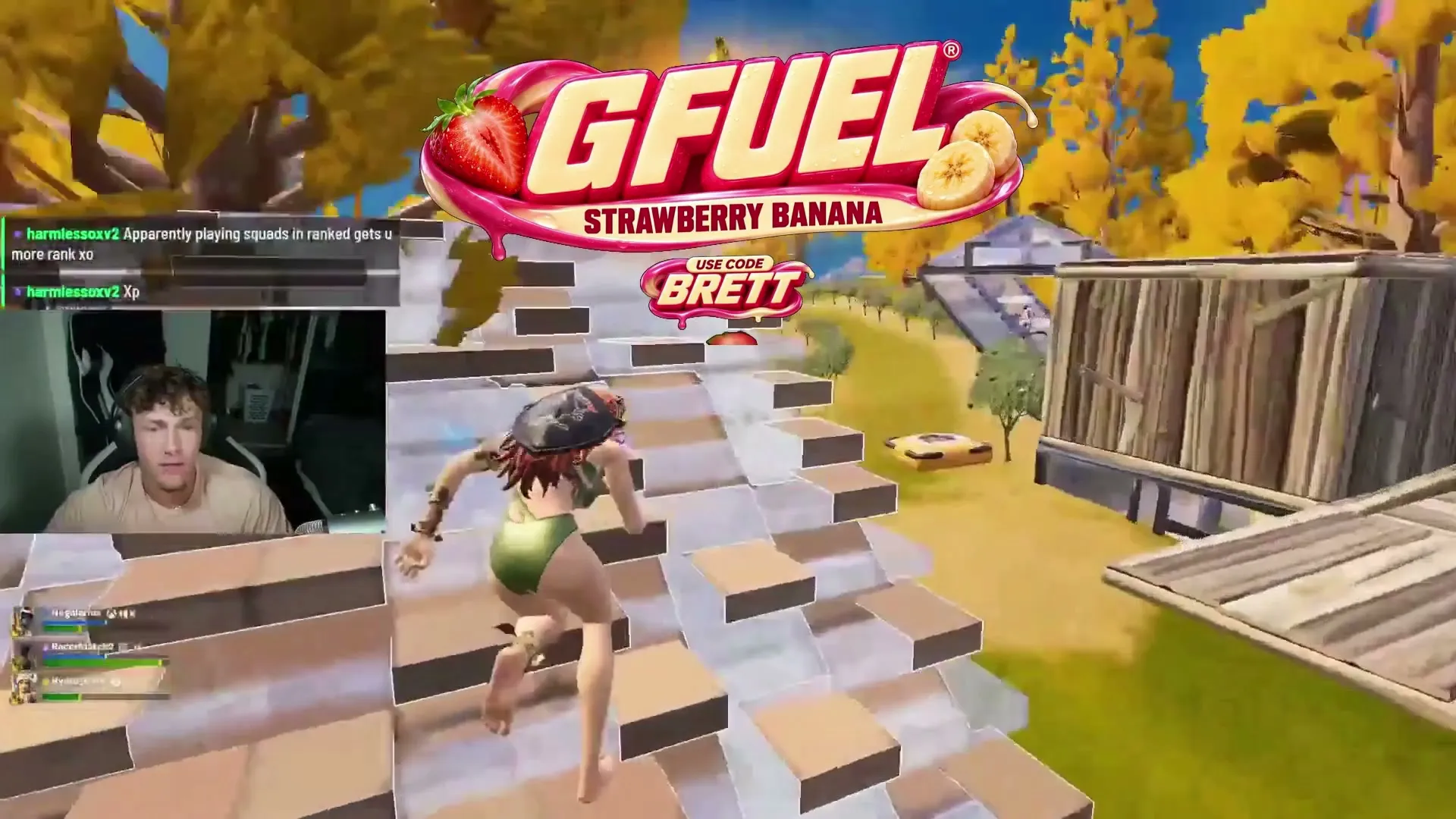
Shoko Moments puts a brand’s logo and the creator’s code right inside those moments. It shows up live on stream, in the VOD, and in every clip the creator posts after. On YouTube it is a custom animation that is part of the video, so there is no sponsor segment to skip.
Setup takes the streamer about a minute. Everything after that is automatic.Here is how it works. Our tech understands gameplay. It knows when the streamer gets the win or pulls off the clutch, and it plays the brand’s animation at that second, with the creator’s code on screen. Nobody presses a button, and the streamer never has to break from the game.
For the brand, that means showing up at the peak of the stream instead of in a break people skip. For the creator, it is sponsor money that doesn’t cost them a segment of their stream or annoy chat. And it goes beyond live. Moments work on recorded videos too, and across different kinds of games.
Here is what it looks like with HyperX.

Back to the trillion
The budget is at a record. The audience is in the stream, watching the play. Put the brand there.
I spent years on the other side of this, as the person on stream. The moments are there every night, on streams of every size. Most of them still have no sponsor in them.
If you run creator partnerships or sponsor streamers, I would like to talk. Email me at tamir@shoko.tv or go to ad.shoko.tv.
Sources
- dentsu, Global Ad Spend Forecasts, Dec 2025
- IAB / PwC Internet Advertising Revenue Report, via MediaPost
- IAB, Creator Economy Ad Spend, Nov 2025
- Monster Beverage 2025 Form 10-K
- Attest 2026 attention economy report, via Advanced Television
- YouGov ad blocker data, via eMarketer
- Nielsen Norman Group, Banner Blindness Revisited
- Newzoo, via PocketGamer.biz
- Streamlabs and Stream Hatchet Q4 2025 Live Streaming Report
- GWI, via The Current
- Activate Consulting, via Hypebeast
- Anzu and Happydemics, via the 4A's
- Anzu and Lumen Research, via PocketGamer.biz
- Zoupyu, on YouTube's Shorts originality update
- Digiday, The case for and against clipping